The Vanishing Margin: Where Public Charging Loses Its Cost Advantage in 2026

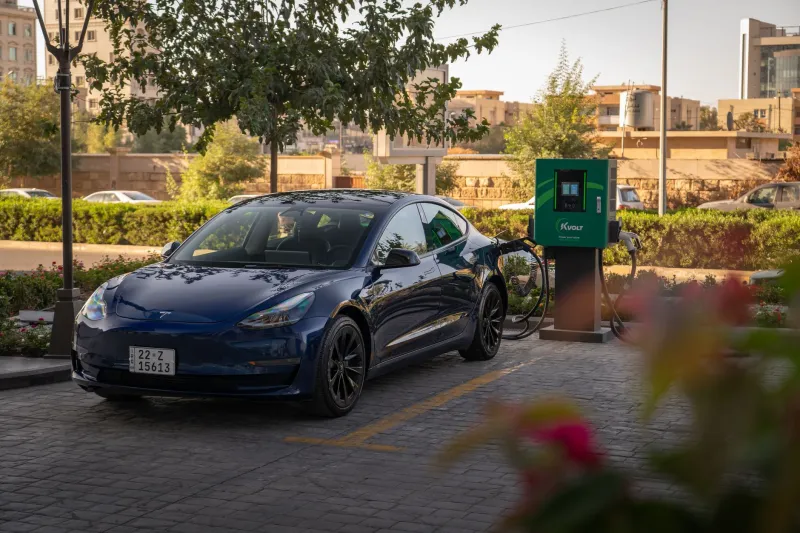
Photo: Tom Parnell, CC BY-SA 4.0, via Wikimedia Commons
For most of the past decade, the case for electric motoring rested on a simple comparison: a kilowatt-hour costs less than a litre. That comparison was always flattering, because it ignored how many kilowatt-hours a car actually consumes per mile once charging losses, cold weather and real-world efficiency are folded in. In 2026, with public rapid charging priced between roughly 69p and 85p per kWh in many locations, the flattery has run out. For a meaningful slice of UK drivers, paying at a motorway rapid charger now costs more per mile than filling a reasonably economical petrol car.
The arithmetic that decides it
Pence per mile is the only comparison that matters, and it requires three inputs on the electric side: the vehicle's consumption in miles per kWh, the losses incurred in converting grid electricity into stored energy, and the price paid at the charger.
Direct-current rapid charging typically loses around 8 per cent to heat and conversion, and that loss is billed to the driver because the network meters what leaves the cabinet, not what reaches the battery. A car achieving 4.0 miles per kWh therefore draws roughly 0.272 kWh from the grid for every mile travelled. Multiply by the tariff and the picture becomes clear.
| Vehicle efficiency | @ 55p/kWh | @ 69p/kWh | @ 79p/kWh |
|---|---|---|---|
| 3.0 mi/kWh | 19.9p | 25.0p | 28.6p |
| 3.5 mi/kWh | 17.1p | 21.4p | 24.5p |
| 4.0 mi/kWh | 14.9p | 18.7p | 21.5p |
| 4.5 mi/kWh | 13.3p | 16.7p | 19.1p |
On the fossil side, at an indicative £1.38 per litre for unleaded, a 40 mpg petrol car returns about 15.7p per mile. A 50 mpg car returns 12.5p; a thirsty 30 mpg car returns 20.9p. Diesel at £1.45 per litre gives roughly 13.2p at 50 mpg and 14.6p at 45 mpg.
Where the line falls
Set the two tables against each other and the crossing points are stark. A 4.0 mi/kWh EV bought at 79p per kWh costs 21.5p per mile — a figure that no mainstream petrol hatchback or saloon will match, because a petrol car would need to return below 30 mpg to be more expensive. At 69p, the EV's 18.7p only beats petrol once the comparison car drops below about 34 mpg. At 55p, the EV wins comfortably against anything shy of 42 mpg.
Efficiency is the more punishing variable. A larger SUV or van returning 3.0 miles per kWh and paying 79p per kWh lands at 28.6p per mile, which is more expensive than a 25 mpg petrol vehicle. That is not a fringe scenario; it is a cold January motorway journey in a big electric estate.
Which drivers cross the line first
Four groups are most exposed.
Drivers without a driveway. Roughly a third of UK households cannot charge at home. For them, the public network is not an occasional top-up but the primary fuel supply, and the average price paid converges on the rapid tariff rather than the cheaper slow-charger rate.
High-mileage motorway users. A sales representative covering 25,000 miles a year on ultra-rapid charging at 79p is spending over £5,300 on electricity in a 4.0 mi/kWh car. The same mileage in a 45 mpg petrol model costs around £3,500.
Drivers of larger or older EVs. Vehicles returning under 3.5 miles per kWh carry a structural disadvantage that no route planning fully erases.
Winter drivers. Cold-weather efficiency losses of 15 to 20 per cent are well documented. A car that manages 4.0 miles per kWh in June may return 3.3 in January, pushing a 69p charge from 18.7p to roughly 22.7p per mile — past parity with almost any petrol car on sale.
The home-charging escape hatch
The comparison changes entirely at the driveway. On a standard variable tariff of about 24.5p per kWh, and allowing 12 per cent for alternating-current losses, a 4.0 mi/kWh car costs around 7p per mile. On an off-peak electric-vehicle tariff nearer 7p per kWh, the figure falls to roughly 2p per mile. Even the least favourable home tariff leaves an EV with a margin that public charging cannot replicate.
This is the central asymmetry of 2026. Public rapid charging is not competing with home charging; it is competing with petrol, on petrol's terms, and it wins only when the car is efficient and the charger is cheap.
Levers that move the line
Route and network choice matter more than most drivers assume. The spread between an out-of-town supermarket rapid at 44p and a motorway ultra-rapid at 84p is nearly a factor of two, and it is enough to swing a 4.0 mi/kWh car from 13p to 24p per mile on the same journey.
Three practical levers narrow the gap:
- Charge off the motorway. A ten-minute detour to a retail park or supermarket site frequently saves 20p per kWh, which on a 60 kWh fill is £12.
- Use a network-agnostic payment app with negotiated rates. Several UK platforms deliver 5p to 12p per kWh below the pay-as-you-go price at participating networks.
- Avoid charging past 80 per cent on a rapid. The charging curve tapers sharply, so the final fifth can take as long as the first four and is charged at the same rate.
One further point is often overlooked: public charging attracts 20 per cent VAT, whereas domestic electricity is charged at 5 per cent. That difference is already embedded in the headline prices quoted above, but it explains why the public-to-home gap is wider than raw tariff comparisons suggest.
A test before you commit
Prospective buyers should run the calculation honestly. Take the car's realistic winter efficiency, subtract 8 per cent for rapid charging losses, multiply by the price at the charger you would actually use, and compare the result with the pence per mile of the petrol or diesel car being replaced.
If the answer comes out above roughly 18p per mile and there is no driveway on the horizon, the financial case for a like-for-like switch is thinner than the marketing suggests. If it comes out below 10p, the case is overwhelming. The margin has not disappeared — but in 2026 it is no longer automatic, and it is no longer the same for every driver.