Who Pays for the Plug? EV Chargers in Rented UK Homes in 2026

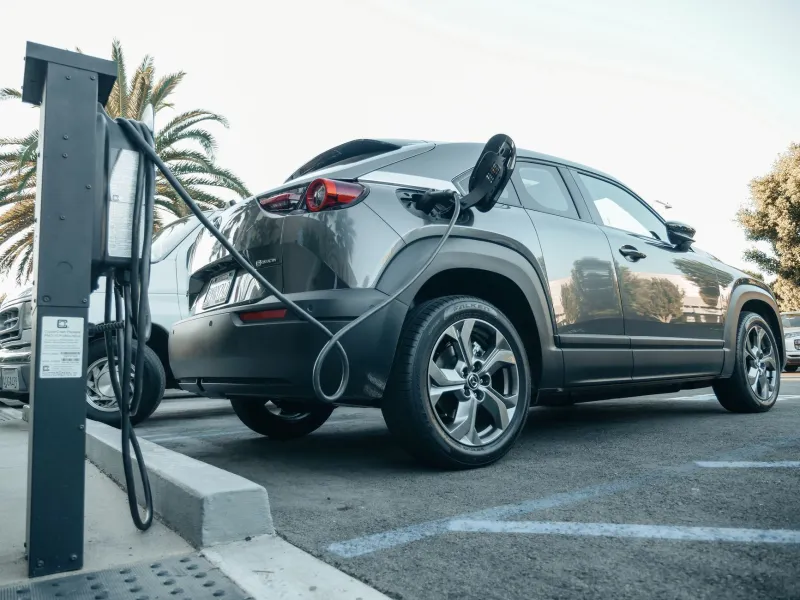
Photo: Dave Eagle, CC BY-SA 2.0, via Wikimedia Commons
Renting a home with off-street parking is no longer simply a question of whether a charger can be fitted. In 2026 the practical question is who pays for it, who owns it, and how the electricity is accounted for when the tenant's car is plugged in. A home chargepoint is part appliance, part fixed installation and part alteration to the property. That combination makes it easy for a well-intentioned conversation to become a lease dispute if the cost allocation is left vague.
Start with the installation quote, not the charger
Installers commonly quote £800 to £1,500 for a smart 7kW charger with a straightforward cable run from the consumer unit. The figure moves quickly when the property needs a consumer-unit upgrade, a longer cable route, trenching, a DNO connection change or work in a listed building. A quote should separate hardware, labour, electrical upgrades, groundwork, commissioning and warranty. A £600 charger can become a £2,000 installation.
That distinction matters because the charger unit is the least important part of the cost discussion. The fixed electrical work is what makes the installation difficult to remove and what gives the landlord a lasting improvement to the property. The tenant, by contrast, may only occupy the home for a year or two. A fair allocation should recognise that mismatch rather than treat the whole invoice as a single item.
Grants: eligibility before enthusiasm
Grant support for renters and landlords has existed for several years, but eligibility is not automatic and schemes are subject to budget and rule changes. In 2026, assume nothing until an approved installer has checked the property, the applicant and the proposed chargepoint against the current criteria. The grant may be capped at a percentage of the cost and a maximum sum, and it may be paid to the installer rather than to the landlord or tenant.
Grant funding rarely resolves the underlying question of who benefits. If the landlord applies, the landlord may retain the asset. If the tenant applies, the tenant may be paying for an improvement that cannot easily be removed. Before work begins, confirm who is named as the applicant, who receives any grant, and what happens if the tenant leaves during the grant's conditions. A charger installed in a communal area or on a landlord's supply may also fall outside the simplest grant route.
Lease clauses and consent
Most tenancy agreements do not mention EV charging. That silence is not permission. Alteration clauses, fixtures and fittings provisions, reinstatement obligations and insurance requirements all need checking. A charger fixed to an external wall is likely to be an alteration, even if it is small. A cable run through a communal hallway or across a shared car park may need a wayleave or management-company consent.
Written consent should cover more than the installation date. It should identify the charger model, the cable route, who arranges commissioning, who maintains the unit, who insures it and what happens at the end of the tenancy. If the property is leasehold, the landlord may also need the freeholder's consent. These steps are dull, but they are cheaper than removing a charger under dispute.
Metering and who pays for the electrons
There are two broad supply models. In the first, the charger runs from the tenant's own electricity supply. The tenant pays the supplier directly and the metering question is largely solved. This works best where the parking space is within the tenant's demise and the meter is accessible.
In the second model, the charger runs from a landlord's supply, commonly in a block of flats or a shared parking area. Here, reimbursement needs evidence. A dedicated kWh meter or the charger's own consumption data can support a charge based on units used. For informal arrangements, smart-charger data may be enough. For a formal recurring charge, a MID-approved meter is safer. A flat monthly fee unrelated to use is likely to be challenged, particularly if the tenant drives little.
The rate should reflect the actual cost of electricity, not a profit centre. Landlord and tenant should agree how the rate is reviewed when the tariff changes and how standing charges are treated. Resale of electricity is subject to rules, so take advice if the arrangement looks like a supply rather than a simple recovery of cost.
Communal parking and flats
An allocated bay is not necessarily within the tenant's legal demise. In a block of flats, the charger may be installed on common parts, served by a landlord supply and managed through a service charge. The management company may require a licence, insurance evidence and a cable-management solution. Fire risk, accessibility and equality considerations can also arise.
A charger in a communal car park is infrastructure, not a tenant's portable appliance. That points towards the landlord or management company owning the asset and recovering running costs from users. If a tenant funds the installation, the agreement should state how the investment is protected if the bay allocation changes or the tenant moves out.
When the tenant moves out
Removal is rarely free. Leaving the charger may benefit the landlord, but it may not suit the next tenant, particularly if they do not own an EV. The tenancy should state whether the charger stays, is removed, or is transferred at a valuation. Make-good obligations, isolator arrangements and warranty transfer should also be recorded. If grant funding was used, check whether early removal or change of use affects the conditions.
A fair split framework
A workable allocation usually separates capital from running costs. The landlord pays for fixed improvements that remain with the property. The tenant pays for the electricity they consume, supported by metering. Maintenance and insurance sit with the owner of the asset. Any tenant contribution to capital should be explicit, time-limited and linked to the benefit the tenant actually receives.
Fairness here is not a single percentage split. It is clarity about who owns the charger, who pays for the next repair, and what happens when the keys are handed back. A rented-home charger can be a sensible investment for both sides, but only if the paperwork is as sound as the wiring.