Borrowed Watts: The Practical Economics of Neighbour-to-Neighbour EV Charging in 2026

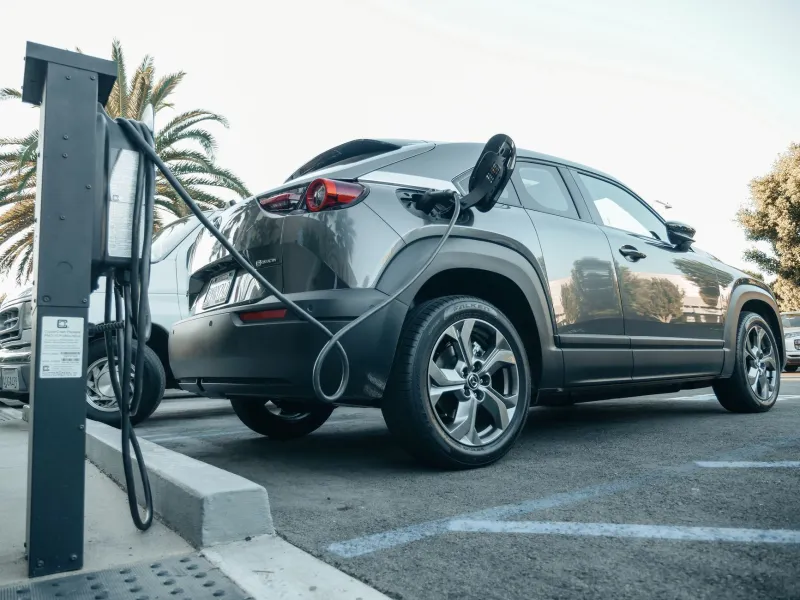
Photo by Photo by Ratio EV Charging on Unsplash on Unsplash
For a UK driver without a driveway, the charging market has long looked binary. Either pay for public charging, often at rapid-charger prices, or move somewhere with off-street parking and install a home charger. Peer-to-peer charging platforms have spent the past few years trying to open a third route: paying a neighbour, a local business or a community site to use their charger at a rate that undercuts the public network. In 2026, the idea is no longer novel, but it remains unevenly understood. The economics can be attractive; the practicalities require care.
The middle ground between driveway and forecourt
Peer-to-peer charging works like a specialised booking platform. A host lists a home charger, a workplace charger or a community charger with times and a price per kWh. A driver books a slot through an app, plugs in, and pays through the platform. The host receives a payment, usually after a commission. The driver gets a slower charge than a motorway rapid, but often a much lower price than a public rapid charger.
The model suits drivers who can leave a car for an hour or two near home or work. It is less suited to a hurried top-up on a long journey. The value comes from location and dwell time: a charger on a residential street where the driver can leave the car during a shift, a shopping trip or an evening is more useful than a remote rapid charger that costs twice as much per kWh.
How the rates compare
Sharing rates vary by platform, location and charger speed. In 2026, peer-to-peer listings commonly sit somewhere between 18p and 30p per kWh for a home AC charger, with some hosts pricing higher to reflect convenience or a prime location. Public AC charging is often in the 35p to 55p range, while public rapid charging frequently runs from 70p to 85p per kWh. A domestic tariff might be 7p off-peak or 24p to 30p standard, depending on the supplier and region.
Those ranges matter because the host is not selling electricity at cost. The host covers the energy, the use of the charger, the inconvenience and, in some cases, platform commission. A host setting 22p per kWh may be making a small margin on a standard-rate domestic tariff, or a larger margin on an off-peak tariff. The driver is paying for access as much as for electrons.
The annual saving for a modest driver
Take a driver covering 6,000 miles a year in an EV that averages 3.5 miles per kWh. Annual energy use is about 1,714 kWh. At a peer-to-peer rate of 22p per kWh, the bill is roughly £377. At a public rapid average of 75p per kWh, the same energy costs about £1,286. The saving is around £909 a year before any platform booking fees. At a public AC average of 45p per kWh, the bill is about £771, so the peer-to-peer saving falls to around £394.
Those figures are illustrative, not promises. A driver who relies mostly on slow public AC charging will see a smaller gap. A driver who uses rapid chargers on motorways will see a larger one. Platform fees can trim the saving: a £1 booking fee on 50 sessions is £50 a year, and some platforms charge the host a commission that may be reflected in the advertised rate. Even so, for a no-driveway driver doing modest mileage, the arithmetic is often compelling.
Insurance and permissions
This is where peer-to-peer charging demands more attention than a public charge point. A domestic home insurance policy is typically priced for private use. Letting strangers use a charger in return for payment may be treated as business use, and a standard policy may not respond if something goes wrong. Some platforms provide public liability cover or damage cover as part of their terms; others leave it to the host. Hosts should read the policy wording and, where necessary, notify their insurer before listing.
Mortgage lenders and landlords may also have a view. A leaseholder or tenant considering a shared charger should check the lease or tenancy agreement. A charger installed under a domestic grant scheme may have conditions attached. On the energy side, domestic tariffs are not designed for resale, and some supplier terms restrict it. Platforms often frame payments as cost-sharing rather than resale, but the distinction is worth checking rather than assuming.
Etiquette and practicalities
Sharing a charger is a small commercial relationship conducted at close quarters. The practical rules are simple but easy to overlook. Drivers should book only the time they need, arrive when they say they will, leave the space tidy and report faults promptly. Hosts should make access clear, keep cables safe and avoid trip hazards, and communicate any restrictions on parking or gate access.
The charger itself should be in good order. A domestic charge point with a Type 2 tethered cable or a socketed unit should be installed and tested properly, with appropriate protection. A host who lists a charger that repeatedly faults will not keep bookings. A driver who blocks a neighbour's driveway or overstays a booked slot will not be welcomed back. The platform may handle payments and disputes, but the relationship is local.
Is it worth it?
For a driver with a driveway, peer-to-peer charging is rarely cheaper than charging at home. The domestic tariff, even at standard rates, is usually lower than a sharing rate, and the convenience is greater. The case is stronger for drivers in flats or terraced streets who currently rely on public charging. For them, a nearby shared charger can turn a 75p rapid habit into a 22p evening top-up.
The saving scales with mileage. At 4,000 miles a year, the peer-to-peer versus rapid saving in the example above is around £606; at 8,000 miles, it is around £1,211. Against public AC, the saving is more modest. The decision should also account for time, reliability and the risk of relying on someone else's availability. Peer-to-peer charging is not a substitute for a reliable home charger, but in 2026 it is a credible cost-reduction tool for drivers who are otherwise locked out of the cheapest part of the UK charging market.