The Credential Premium: What Your Payment Route Adds to a Public EV Charge in 2026
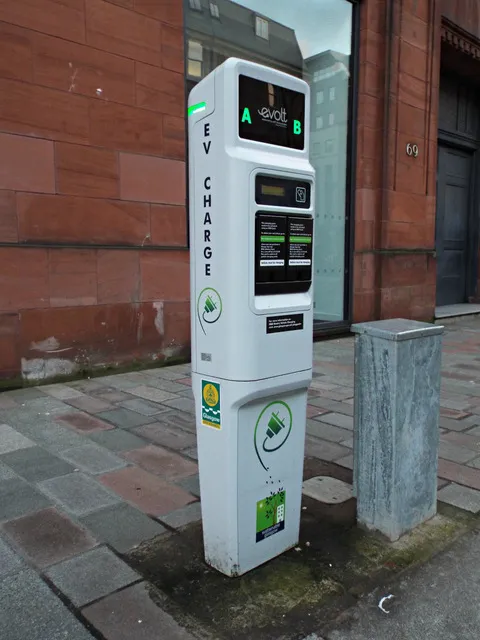
Photo: Thomas Nugent , CC BY-SA 2.0, via Wikimedia Commons
Public charging in the UK is often presented as a simple unit price: a number of pence per kilowatt-hour, displayed on a screen or an app. That figure matters, but it is not the whole transaction. In 2026, the route a driver uses to authorise and pay for a charge can change the effective cost of a session through membership charges, session fees, minimum top-ups, card administration and roaming mark-ups. For drivers comparing public charging costs, the payment method deserves the same scrutiny as the tariff itself.
Where the advertised rate stops
A public charging bill can contain several layers. The first is the energy tariff, usually quoted in pence per kWh and inclusive of VAT at 20% for public charging. The second is a connection or session fee, which some networks apply regardless of how much energy is drawn. The third is time-based charging, including idle fees after a grace period and, where relevant, parking charges levied by the site owner. A fourth layer is the access route: the app, card or platform used to start the session.
Not every network separates these layers clearly. A contactless rate may differ from an app rate. A membership may reduce the energy price but introduce a monthly fee. A roaming platform may present a single price that already includes its own margin. The practical question is not which headline rate looks lowest, but which total cost applies to the way a particular driver charges.
Contactless: convenience with a margin
Bank card contactless remains the simplest way to start a public charge. It requires no account, no pre-loaded balance and no prior relationship with the network. For occasional users, that convenience can be worth a small premium. Some operators price contactless sessions above their app or member rates, reflecting the cost of payment processing and the absence of a customer account.
Contactless is not automatically more expensive, however. Several networks now advertise the same pence per kWh across payment methods, particularly on rapid and ultra-rapid chargers. The more common issue is the pre-authorisation hold. A card reader may reserve a sum - commonly £30 to £60, and sometimes more - before the session begins. This is not a fee if the hold is released correctly, but it ties up available funds for a period and can be inconvenient for drivers on tight budgets or using debit cards with low balances.
Contactless also produces a receipt that may be less detailed than an app record. For drivers reclaiming business mileage or charging costs, that matters. A bank statement line showing a network name and a total is often insufficient to demonstrate the energy drawn, the tariff applied and any session fee.
Network apps: member rates and minimum balances
Native network apps are the most common route for regular public chargers. They can offer lower energy rates, sometimes labelled as member or app pricing, and they usually provide a clearer session breakdown. The trade-off is account administration. Many apps require a payment method on file, and some operate a minimum top-up or auto-recharge balance. A £10 minimum is not unusual. For a driver who charges rarely, that balance can sit unused, and any expiry terms should be checked.
Monthly memberships are another variable. A subscription may reduce the pence per kWh, but the saving only materialises after a certain volume of charging. A £4.99 monthly fee that cuts 5p per kWh needs roughly 100 kWh of charging in that month to break even. For a driver doing one 40 kWh rapid session a month, the membership may not pay. For a high-mileage driver using the same network repeatedly, it can.
App pricing can also vary by charger type and location. A rate advertised in the app for a slow charger may not apply to a rapid unit at the same site. Drivers should check the specific charger entry before starting, rather than assuming a network-wide price.
RFID cards: the fleet legacy
Radio-frequency identification cards remain common in fleet and business charging. They offer a dependable way to authorise a session where mobile signal is weak, and they give fleet managers a single billing record across drivers. For private drivers, however, cards can carry administrative costs: issue fees, replacement fees, postage, or a monthly card charge. Some networks waive these for members; others do not.
A card is rarely the cheapest route for a low-mileage private driver. It can still be useful as a backup where an app fails or a contactless reader is unavailable. The sensible approach is to treat any card fee as part of the access cost and compare it with the likely saving over the year, not just the first session.
Roaming platforms: one app, layered pricing
The UK market now has several roaming and aggregator platforms that let drivers start sessions across multiple networks from one account. Examples include Octopus Electroverse, Bonnet and Zapmap Pay, alongside network-specific apps. The appeal is obvious: fewer accounts, one payment method and a map that spans operators.
The commercial structure is less obvious. A roaming platform may pass through the network tariff and add a service fee, or it may negotiate a rate and keep a margin. Some platforms charge a monthly subscription for discounted pricing; others are free at the point of use but may not always show the underlying network rate. The result is that the same charger can cost different amounts depending on whether the driver starts it through the network's own app or a roaming app.
Roaming is not inherently poor value. For a driver who uses many networks irregularly, the convenience of one account can outweigh a modest mark-up, and some platforms offer genuinely competitive rates. The risk is assuming that a single app always delivers the best price. It does not. The platform's receipt should show the energy price, any session fee and any platform charge; if it does not, the driver cannot judge the premium.
A worked comparison
Consider a 45 kWh rapid charging session at a network advertising 79p per kWh. The energy cost is £35.55 including VAT. Paid by contactless, the session may cost that amount, subject to a pre-authorisation hold of, say, £50 that is later released.
Through the network's app, a member rate of 74p per kWh would reduce the energy cost to £33.30. If the app membership is £4.99 per month, the driver saves £2.25 on this session but is still £2.74 worse off for the month unless further charging takes place. The break-even is around 100 kWh in that month.
Through a roaming platform priced at 82p per kWh plus a £1.50 session fee, the same 45 kWh would cost £36.90 in energy plus £1.50, or £38.40. That is £2.85 more than the contactless example. A different roaming platform might charge 76p per kWh plus £1, producing £34.20 plus £1, or £35.20 - slightly cheaper than contactless. The lesson is that the platform name alone does not determine value; the full line items do.
Costs that do not appear on the tariff board
Several payment-related costs sit outside the advertised rate. Pre-authorisation holds affect cash flow even when they are refunded. Failed sessions can leave a temporary hold and no charge. Minimum top-ups can strand small balances. Card replacement fees and subscription auto-renewals can pass unnoticed. Some roaming platforms may also apply their own idle or overstay terms, which may differ from the host network's published policy.
For business drivers, the quality of the receipt is a cost in itself. A clear record of energy, VAT, fees and location reduces the administrative burden of reimbursement. A bare card transaction often does not provide that.
Choosing a payment route
The right payment method depends on use. An occasional driver who charges a few times a year is usually best served by contactless, accepting the possibility of a pre-authorisation hold in exchange for no commitment. A regular user of one network should compare the native app's member rate with the monthly fee and calculate a realistic break-even. A driver who uses several networks should compare roaming platforms on the total cost of a typical session, not just the pence per kWh. Fleet drivers may need an RFID card for control and record-keeping, but should question any issue or subscription fee that cannot be justified by usage.
In 2026, public charging is a competitive market with overlapping access routes. The advertised rate remains the foundation of the bill, but it is not the bill. Drivers who compare the full cost of payment - energy, session fees, membership, holds and platform charges - will make better decisions than those who compare only the number on the charger.