The Last Fifth: The Real Economics of Stopping a Public EV Charge at 80% in 2026
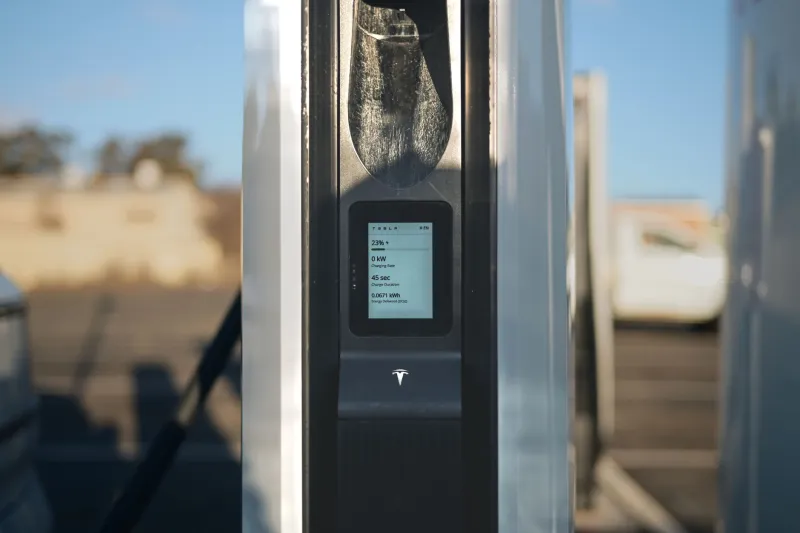
The 80% ceiling has become one of the most repeated pieces of advice in UK electric motoring. Drivers are told to unplug at four-fifths state of charge on public rapid chargers, save time, protect the battery and avoid the slow, awkward final stretch. There is truth in that guidance, but it is not a complete cost model. The last 20% can be poor value on an ultra-rapid charger before a short onward trip, and it can be entirely rational before a long motorway run or when the alternative is a more expensive public network later.
The economics turn on a distinction that is easy to miss: public charging tariffs are usually charged per kilowatt-hour, not per minute. If the price per kWh is unchanged, the electrons in the final fifth cost the same as the electrons before it. What changes is the time required to buy them, the overheads attached to the session and the usefulness of the extra range. The 80% rule is therefore a rule about charging speed and battery behaviour, not a direct rule about pence per mile.
What the 80% rule actually controls
On most rapid and ultra-rapid chargers, an EV accepts power quickly at low state of charge, then tapers as the battery fills. The exact curve varies by model, temperature and charger, but the pattern is familiar: 10–80% may take 25–35 minutes on a suitable car and charger, while 80–100% can take a similar time for a much smaller amount of energy. The charger has not become more expensive per unit; it has become slower.
For a car with 60 kWh of usable battery capacity, a 20–80% session delivers 36 kWh. A further 80–100% delivers 12 kWh. At an illustrative rapid-charging price of 79p per kWh, the first portion costs £28.44 and the second £9.48. The marginal energy is cheaper in absolute terms only because there is less of it. Per kWh, the rate is identical.
That matters because many drivers compare the whole session cost with the whole session range. The correct comparison is marginal: what does the last 12 kWh cost, in money and minutes, and what does it replace?
Pence per mile: same electrons, different overheads
Assume a car achieves 3.5 miles per kWh on a motorway run. The 36 kWh from a 20–80% session provides about 126 miles. At 79p per kWh, that is 22.6p per mile in energy alone. The 12 kWh from 80–100% provides about 42 miles and costs £9.48, also 22.6p per mile in energy alone. On a pure per-kWh tariff, stopping at 80% does not reduce the cost of the miles actually driven; it reduces the number of miles bought in that session.
The picture changes once session fees, parking charges, idle fees or the driver’s time are included. A £5 session fee spread over 126 miles adds about 4p per mile. Spread over 42 miles, it adds about 12p per mile. If the final 20% takes an extra 25 minutes and the driver values time at £12 per hour, that adds £5, or roughly 12p per mile on those 42 miles. A driver paying for parking by the minute may face a similar penalty. In those cases, stopping at 80% genuinely saves money because the overheads are disproportionate to the small amount of energy delivered.
Idle fees deserve particular attention. Several UK public charging operators apply penalties once a car remains plugged in after charging has finished. Topping up to 100% at a busy motorway services increases the risk of overstaying, especially if the driver misjudges the taper. The penalty can easily exceed the value of the final few kilowatt-hours.
When the last fifth is worth buying
The final 20% is not inherently wasteful. It is worth paying for when it avoids a more expensive or inconvenient stop later. A driver who reaches a public charger at 70% and knows the next leg is 90 miles may be better served by taking the car to 100% at a known price than by stopping again on a motorway at a higher rate. The same applies where the current charger is relatively cheap and the next realistic option is an ultra-rapid charger at a premium.
Destination charging is another exception. If the journey ends at a hotel or relatives’ house with no usable socket, the last 20% may provide the reserve needed for local driving and the return leg. In winter, that reserve has additional value. Cold weather reduces range and increases consumption, so a buffer above 80% can be a practical insurance policy rather than an extravagance.
Battery health also deserves a proportionate reading. Frequent high-state-of-charge sessions on rapid chargers are not ideal for every chemistry, and manufacturers often recommend an 80% daily limit for cars with nickel-rich batteries. But an occasional 100% charge before a long trip is not the same as a daily habit. Drivers should follow the handbook for their specific model, including any recommendation for regular full charges on lithium iron phosphate batteries.
The motorway journey test
Consider a 200-mile motorway trip in a car with a realistic 3.5 miles per kWh. Leaving home at 100% is usually the cheapest strategy because home electricity, particularly on an off-peak tariff, costs far less than any public rapid charger. If the driver instead leaves home at 80% and stops early on the motorway, the stop may be short, but the energy is bought at public rates.
At an off-peak home rate of 7p per kWh, the 12 kWh between 80% and 100% costs 84p and provides about 42 miles. At a public rapid charger at 79p per kWh, the same energy costs £9.48. The home top-up is more than ten times cheaper. For a driver who is leaving shortly, charging to 100% at home before departure is normally the rational choice, even if the car would otherwise be kept at 80% for daily use.
On the road, the calculation is narrower. If the final 20% at a public charger takes 25 minutes and avoids a second 20-minute stop later, it may save time overall. If it merely adds 42 miles to a journey that already has a convenient cheaper charging stop, stopping at 80% is likely to be better. The answer depends on the route, the next charger’s price and reliability, and the value the driver places on time.
A practical rule for 2026
Treat 80% as a default for public rapid charging, not a prohibition. Stop at or near 80% when the charger prices by time, when session fees are material, when idle penalties are likely, when the next leg is short, or when a cheaper charger is close ahead. Go beyond 80% when the extra range avoids a more expensive stop, when the current charger is cheap relative to alternatives, when destination charging is unavailable, or when the driver is preparing for a long trip and the battery is already on a public charger.
At home, the arithmetic is different. Off-peak electricity is usually so much cheaper than public charging that the last 20% is worth buying before a long journey, provided the car is not left at 100% for days on end. The 80% ceiling is a useful habit, but in 2026 it should be applied with a calculator rather than as a reflex.