Does Low Mileage Justify a Driveway Charger? The 2026 Payback Calculation
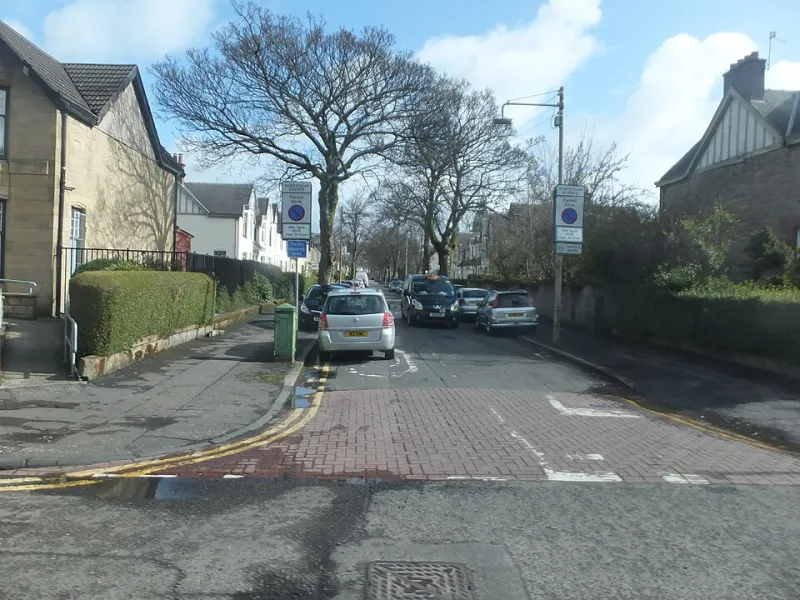
Photo: Barbara Carr , CC BY-SA 2.0, via Wikimedia Commons
A home EV chargepoint is often presented as an obvious financial win. For a high-mileage driver, it usually is. For a driver covering 6,000 miles a year, the case is narrower. The upfront cost has to be recovered from the gap between home electricity and the public charging that would otherwise be used. That gap is wide against rapid public charging and much narrower against workplace, destination or lamppost charging. The payback period is therefore a question about alternatives, not a fixed number.
This analysis sits at the boundary between home and public charging. The upfront cost belongs to the home, but the saving is measured against the public network. In 2026, that is the correct frame for a low-mileage UK driver deciding whether to install a chargepoint at all.
The 6,000-mile baseline
Assume an EV efficiency of 3.5 miles per kWh. At 6,000 miles a year, the car uses about 1,714 kWh. If that electricity is bought from a public rapid charger at an illustrative 65p per kWh, the annual cost is about £1,114. If it is bought at home on an off-peak tariff at 8p per kWh, the electricity cost is about £137. Add an illustrative £60 annual premium for an EV-specific standing charge and the home cost is about £197. The annual saving is roughly £917.
Against a £1,200 installed chargepoint, that implies a payback of about 1.3 years, or roughly 7,850 miles. Against a £1,000 installation, payback falls to about 1.1 years. Those figures explain why the home charger is often described as a straightforward investment. But they depend heavily on the public-charging alternative.
What changes the payback
If the alternative is a standard home tariff at around 26p per kWh rather than an off-peak EV tariff, the 6,000-mile electricity cost is about £446. The saving against 65p public rapid charging falls to about £668, and payback on £1,200 extends to about 1.8 years. If the public alternative is slower and cheaper, at around 50p per kWh, the public annual cost is about £857. Against the off-peak home cost of £197, the saving is about £660 and payback is about 1.8 years. Against the standard home rate, the saving is about £411 and payback is closer to three years.
At lower mileage, the fixed installation cost dominates. At 2,000 miles a year, the car uses about 571 kWh. Public rapid charging at 65p costs about £371. Off-peak home charging at 8p costs about £46, plus the £60 standing premium, for a total of about £106. The annual saving is about £265, and payback on £1,200 is about 4.5 years. At 12,000 miles, the same assumptions produce a public cost of about £2,229, a home cost of about £334 and an annual saving of about £1,895. Payback falls to roughly eight months.
| Annual mileage | Public rapid at 65p | Home off-peak at 8p plus £60 premium | Annual saving | Payback on £1,200 |
|---|---|---|---|---|
| 2,000 miles | £371 | £106 | £265 | About 4.5 years |
| 6,000 miles | £1,114 | £197 | £917 | About 1.3 years |
| 12,000 miles | £2,229 | £334 | £1,895 | About 0.6 years |
The break-even mileage can also be expressed per mile. If the gap between public and home electricity is 57p per kWh, and the car travels 3.5 miles per kWh, the saving is about 16.3p per mile before any standing-charge premium. A £1,200 installation therefore needs roughly 7,360 miles of charging to repay itself. Once a £60 annual tariff premium is included, the effective saving at 6,000 miles falls to about 15.3p per mile, and the break-even mileage rises to roughly 7,850 miles.
When the charger does not pay back
The calculation assumes that the driver can install a chargepoint, that they will stay at the property long enough to realise the saving, and that the public network is the realistic alternative. Each assumption can fail.
For renters, the first obstacle is permission. A landlord may agree to installation, but the tenant may not stay for the payback period. Grant support may be available for some rented properties and flats, but eligibility should be checked before treating the upfront cost as fixed. If the tenancy is short, a portable granny charger or reliance on public charging may be the rational choice, even though it is less convenient.
For street-parking households, a home chargepoint is often impossible without a driveway or dedicated off-street space. Council lamppost charging and public networks become the practical alternative. In that case the payback question is moot: there is no home installation to pay back. The relevant comparison is between public charging options, not between home and public.
A shared driveway introduces a different problem. The installation may be feasible, but the cost may be split between households, or one household may bear it while another uses the charger. Load management, cabling routes and permission from the freeholder can add cost and complexity. The payback for the person paying is not the same as the payback for the household as a whole.
Cheap public charging also weakens the case. A driver who can charge at work, at a supermarket or at a council lamppost for a low rate may face a much smaller saving than the rapid-charging comparison suggests. Free destination charging is less common than it once was, but low-cost workplace charging remains a genuine alternative for some drivers. The home charger is then competing with convenience as much as with price.
What the payback figure leaves out
A financial payback calculation is necessary but not complete. A home chargepoint adds convenience: the car can be plugged in overnight, the driver avoids detours to public chargers, and the household is less exposed to public tariff changes. It may also support smarter energy use and future vehicle-to-home equipment, although those benefits are uncertain and should not be used to justify the purchase on their own.
There are also costs that simple payback ignores. Installation can require an earth rod, a longer cable run, ducting or a consumer-unit upgrade. These can add several hundred pounds. The charger itself may have a shorter warranty than the payback period. And the tariff used in the calculation may not last for the whole ownership period.
The neutral conclusion
For a UK driver covering 6,000 miles a year, a home chargepoint can pay back in around one to two years if the realistic alternative is rapid public charging. If the alternative is cheap workplace, destination or lamppost charging, payback may stretch to four years or more. For renters and street-parking households, the question is often not whether the charger pays back but whether it can be installed at all. The 6,000-mile test is therefore not a simple yes or no. It is a test of the alternative — and that is where the answer actually lies.