The Subscription Threshold: When UK Public EV Charging Memberships Earn Their Keep in 2026
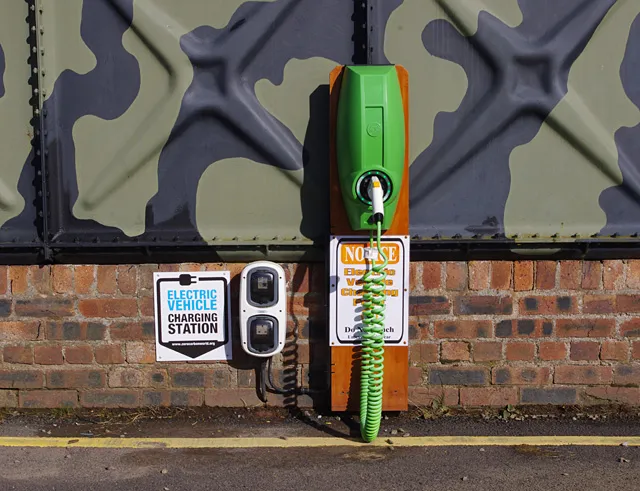
Photo: Ian Taylor , CC BY-SA 2.0, via Wikimedia Commons
Public charging in the UK has become a menu of prices rather than a single rate. The advertised pence per kWh is only the starting point; behind it sit app tariffs, roaming arrangements, payment credentials and, increasingly, monthly subscriptions that trade a fixed fee for a lower rate on one network. For drivers, the question is not whether a discount exists. It is whether the discount is large enough, and used often enough, to clear the fee.
At EV Charger Costs, the practical test is simple: a subscription is a fixed cost dressed as a saving. It deserves the same scrutiny as a home tariff or a finance agreement. The following audit sets out how UK drivers can calculate the subscription threshold for their own mileage and charging behaviour in 2026.
What a public charging subscription actually buys
Most schemes follow a familiar pattern. The driver pays a monthly or annual fee, sometimes with a joining charge, and in return pays a lower rate per kWh on that network. The discount usually applies only to electricity bought through the network’s own app, card or account. Roam to another operator and the subscription has no effect.
That distinction matters because UK public charging is not one market. A driver may have a favourite network near home, another on the motorway and a third at a destination. A subscription tied to one operator is therefore a bet on loyalty: the driver must not only buy enough kilowatt-hours, but buy them from that specific network.
Some plans also include softer benefits, such as priority support or a reduced idle fee. These can be useful, but they should not be counted as cash savings unless the driver would otherwise pay for them. The core calculation is the discount per kWh against the total fee.
The break-even formula nobody prints on the app
The threshold is not complicated. Add the annual subscription cost to any joining fee, then divide by the discount per kWh. The result is the number of kilowatt-hours the driver must buy on that network in a year for the subscription to pay for itself.
For example, a plan costing £6.99 a month with a £10 joining fee and a 10p per kWh discount requires about 939 kWh a year to break even: £83.88 in monthly fees plus £10, divided by £0.10. At an efficiency of 3.5 miles per kWh, that is roughly 3,287 miles of public charging on that network.
An annual plan at £69 with a 12p per kWh discount and no joining fee requires 575 kWh, or about 2,013 miles at the same efficiency. A monthly plan at £7.99 with a 12p discount requires 799 kWh, or about 2,797 miles. These are representative figures, not endorsements of any particular scheme. The principle holds across networks: the bigger the fee, the deeper the discount must be, and the more electricity the driver must buy.
Three driver profiles, three different answers
Consider a driver covering 4,000 miles a year who does 25% of that mileage on public chargers. At 3.5 miles per kWh, that is about 286 kWh of public charging a year. Against a break-even threshold of 800 kWh, a subscription would need a very large discount or a very small fee to make sense. For this low-mileage profile, pay-as-you-go is usually the default.
A medium-mileage driver covering 8,000 miles a year with 45% public charging needs about 1,029 kWh. That driver can clear an 800 kWh threshold, but only if most of those kilowatt-hours are bought on the subscribing network. If the driver spreads public charging across three or four operators, the subscription may still fail. The medium profile is therefore the marginal case: worth checking, rarely worth assuming.
A high-mileage driver covering 16,000 miles a year with 65% public charging needs about 2,971 kWh. Against an 800 kWh threshold, the case is strong, provided the network covers the routes the driver actually uses. For this profile, a subscription can be a genuine cost control rather than a loyalty trinket. The saving is still capped by geography: a discounted rate at a charger that is never convenient is not a saving at all.
Joining fees, lock-ins and the unused-month problem
Joining fees are small enough to be ignored and large enough to spoil a marginal case. A £10 joining fee on a 10p discount adds 100 kWh to the break-even point. On a 12p discount it adds about 83 kWh. That is not decisive for a high-mileage driver, but it can tip a medium-mileage driver from a modest saving into a loss.
Unused months are the bigger trap. A monthly plan can be cancelled, but an annual plan cannot. If a driver pays £79 for a year and uses the network heavily for only four months, the effective break-even is concentrated into that period. The plan may still work, but the driver needs to be honest about seasonality. Summer holiday charging is not the same as year-round commuting.
Drivers should also check whether the discount applies to all charger speeds. Some schemes exclude ultra-rapid chargers or apply different rates by location. A headline discount on a network’s slowest chargers may be irrelevant to a driver who mainly uses motorway hubs. The same caution applies to idle fees and parking charges: a cheaper pence per kWh can be erased by a penalty for overstaying.
The network-loyalty trap
Public charging subscriptions reward loyalty, but UK drivers rarely have the luxury of loyalty. The best-located charger is not always on the cheapest network. A subscription can therefore create a false incentive to detour, queue or pay for parking in order to capture a discount. The true cost of public charging includes time, inconvenience and the risk of a failed charge, not just the rate on the app.
A sensible rule for 2026 is to treat the subscription as a threshold, not a status symbol. Count the kilowatt-hours actually bought on that network in the past year, not the ones the driver intended to buy. Multiply by the discount. Compare the result with the full annual fee, including joining costs. Then ask whether the network genuinely covers the driver’s regular routes. If the answer is uncertain, a monthly plan is safer than an annual one, and pay-as-you-go remains a legitimate default.
Subscriptions can pay for themselves. They do so most reliably for high-mileage drivers with a narrow set of trusted networks. For low-mileage drivers they rarely clear the threshold, and for medium-mileage drivers the outcome depends on discipline and geography. The arithmetic is not secret. It is simply buried beneath the marketing.