Between Two Fuels: The Practical Charging Costs of UK Plug-in Hybrids in 2026
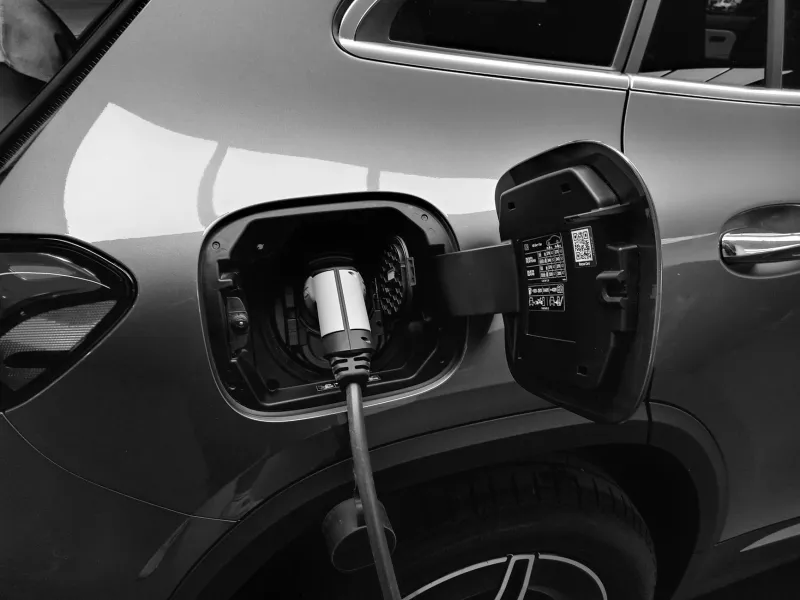
Plug-in hybrid electric vehicles occupy an awkward middle ground. They carry a petrol engine and a battery, and their running costs depend less on the car than on how, where and how often the driver plugs in. In 2026, with home electricity tariffs varying widely and public charging prices under scrutiny, the gap between the best and worst PHEV outcomes is substantial.
The promise is straightforward: cover weekday journeys on electricity, keep petrol for longer trips, and pay less per mile than a conventional car. The reality is more conditional. Small usable batteries, modest electric range and slow alternating-current charging mean a PHEV rewards discipline. Without cheap home charging, the petrol fallback can quietly erase much of the expected saving.
Why the PHEV arithmetic often disappoints
A typical plug-in hybrid sold in the UK has a usable battery of roughly 8 to 14 kWh. That is enough for an official electric range in the region of 30 to 45 miles, though real-world results are often lower. Cold weather, motorway speeds, heating and air-conditioning can reduce the electric-only distance further. Once the battery is depleted, the car reverts to petrol or hybrid operation, and the cost per mile rises accordingly.
Charging speed compounds the issue. Most PHEVs rely on AC charging at 3.7 kW or 7.4 kW rather than DC rapid charging. A full charge may take two to four hours, which is workable at home overnight but less convenient at a public AC bay. Because the battery is small, the cost of a full charge is low in absolute terms, but the cost per electric mile can still be high if the tariff is expensive.
There is also a behavioural factor. A PHEV does not force the driver to charge; it merely allows it. When the battery is flat, the petrol engine takes over and the car may return fuel economy that is respectable for its size but far from the advertised electric figures. The financial case therefore depends on regular plugging-in, not occasional use of the cable.
Home charging: the strongest case
For most private drivers with off-street parking, home charging is the foundation of a sensible PHEV cost case. For illustration, assume a home tariff of 26p per kWh. A 12 kWh usable battery would cost about £3.12 to replenish from empty. If that delivers 35 electric miles, the cost is roughly 8.9p per mile. At an off-peak rate of 12p per kWh, the same charge costs £1.44, or about 4.1p per mile.
Those figures compare favourably with petrol for many popular models. The caveat is that the home rate must be real, not a headline rate that ignores standing charges or time-of-use conditions. A PHEV can usually be charged from a standard three-pin socket, but a dedicated 7 kW home charger is more practical for regular overnight replenishment. The charger cost is a separate capital expense; it is not recovered through lower pence per mile unless the driver stays on a cheap tariff and charges often.
Home charging also suits the PHEV use pattern. A small battery can be filled overnight even at 3.7 kW, and the driver starts each day with the maximum available electric range. For a household doing repeated short journeys within that range, the petrol engine may rarely run. That is the scenario in which a PHEV comes closest to its marketing claims.
Public charging: where the case weakens
Public charging is where the PHEV proposition becomes less predictable. AC public tariffs in the UK commonly sit in a broad range, and in 2026 it is not unusual to see prices from around 45p to 70p per kWh before connection fees, parking charges or overstay penalties. Taking a mid-point of 55p per kWh, a 12 kWh charge costs £6.60. At 35 electric miles, that is about 18.9p per mile. At 70p per kWh, the same charge costs £8.40, or 24p per mile.
Those figures overlap with petrol costs for many PHEVs. If the car returns around 45 mpg on petrol at an assumed 140p per litre, fuel costs roughly 14.1p per mile. Public AC charging at the higher end of the range therefore offers little or no saving, and it may cost more once parking is included. The PHEV also occupies a charge point for hours because its AC charging is slow, which makes expensive public AC less attractive for both cost and etiquette reasons.
There are exceptions. Workplace charging, hotel charging included in a room rate, or a cheap destination charger can make public plugging worthwhile. The mistake is to assume that any public charge is cheaper than petrol. For a PHEV, the electric mile is only cheap when the electricity price is low relative to the petrol price and the car's electric efficiency.
Calculating the break-even electricity price
The practical test is the break-even electricity price. In simple terms, divide the petrol cost per mile by the car's electric miles per kWh. The result is the electricity price at which electric running costs the same as petrol running costs.
Petrol cost per mile can be estimated as: petrol price in pence per litre multiplied by 4.546, divided by miles per gallon. For a car returning 45 mpg at 140p per litre, the calculation is 140 × 4.546 ÷ 45, which equals about 14.1p per mile. If the PHEV achieves 3.5 miles per kWh in electric mode, the break-even electricity price is 14.1 × 3.5, or about 49p per kWh.
| Petrol-only economy | Electric efficiency | Assumed petrol price | Break-even electricity price |
|---|---|---|---|
| 45 mpg | 3.5 miles/kWh | 140p/litre | About 49p/kWh |
| 50 mpg | 3.2 miles/kWh | 140p/litre | About 41p/kWh |
| 40 mpg | 3.0 miles/kWh | 140p/litre | About 48p/kWh |
These are illustrative figures, not predictions for every model or driver. They do show the pattern. A home tariff of 24p to 30p per kWh sits comfortably below most break-even points. A public AC tariff of 55p to 70p per kWh often sits above them. Off-peak home charging can be far cheaper still.
What popular PHEVs look like in practice
Models such as the Kia Niro PHEV, Toyota Prius PHEV, Volkswagen Golf GTE, Ford Kuga PHEV and Mitsubishi Outlander PHEV illustrate the range of the market. Their usable batteries and electric ranges differ, but the broad shape is similar: a full charge costs a few pounds at home and materially more on a public AC network. The electric range is enough for many local trips, but not enough to treat the car as a full battery-electric vehicle.
A PHEV with a 10 kWh usable battery and a 30-mile real-world electric range will cost about £2.60 to fill at 26p per kWh, or 8.7p per mile. At 60p per kWh on public AC, the same charge costs £6, or 20p per mile. The difference is not marginal. It determines whether the PHEV is a low-cost electric commuter or a heavier petrol car with a plug.
When charging a PHEV still makes sense
The strongest case is a driver with a driveway, a cheap overnight tariff and a routine that fits within the car's electric range. Inthat setting, the PHEV can deliver genuine pence-per-mile savings and reduce petrol use substantially. Regular short journeys, school runs, local shopping and commuting distances of 20 to 30 miles are the natural territory.
Charging also makes sense where electricity is included in a workplace or destination price, or where a public charger is unusually cheap. It can be worth plugging in to preserve electric range for a later urban journey, particularly where local air-quality or access rules favour zero-emission running.
It makes less sense for drivers who cannot charge at home and rely on public AC at 60p per kWh or more. In that case, the PHEV may still be a comfortable car, but the electric miles are not reliably cheaper than petrol. Long-distance drivers who rarely recharge should treat the PHEV as a petrol car with a small electric assist, not as an electric vehicle with a backup engine.
The central point for UK drivers in 2026 is that a plug-in hybrid is not automatically a low-cost choice. It is a cost-optimisation tool. The break-even electricity price, the home tariff and the regularity of charging matter more than the badge or the official economy figure. Plugged in cheaply and often, it can work well. Left to run on petrol, it can be an expensive way to carry a battery.