The Slow Socket Settlement: Granny Charging Costs for UK Drivers in 2026
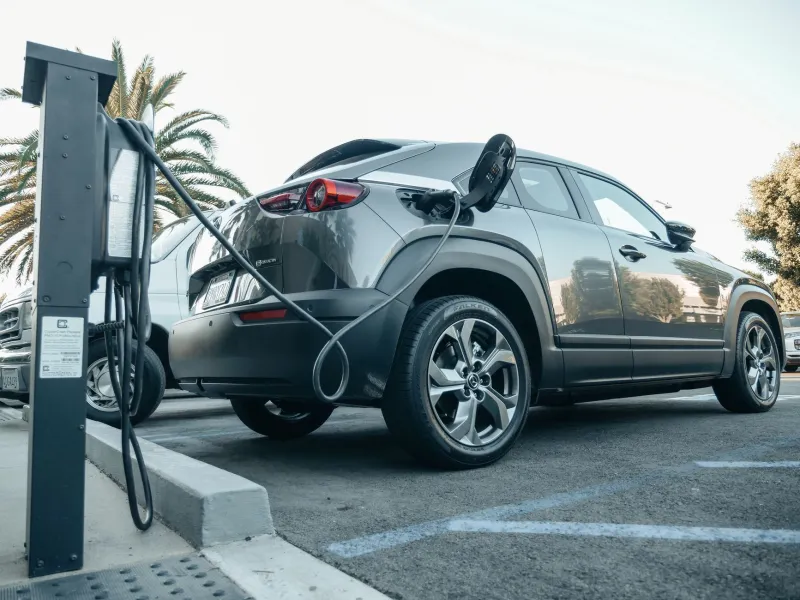
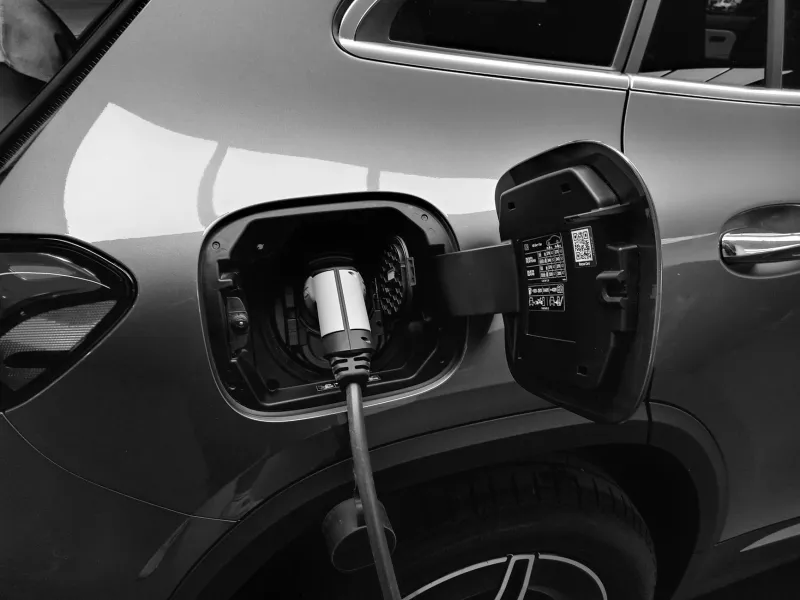
For many UK households, the first EV charge happens not at a motorway services or a dedicated wallbox, but at an ordinary 13A socket. The so-called granny charger — more accurately a portable EVSE supplied with a three-pin plug — asks little of the buyer beyond a usable socket and a degree of patience. Yet the financial case is not simply a matter of multiplying kilowatt-hours by a domestic tariff. Continuous-load behaviour, conversion losses, time-of-use bands and the practical limits of older wiring all shape the final bill.
What a three-pin cable actually draws
Most UK portable EVSEs limit current to 10A, not the 13A a plug is nominally rated for. That reflects the continuous nature of EV charging: a plug and socket carrying near-maximum current for several hours will warm up, and continuous loads are treated more cautiously than short bursts. The practical output is therefore around 2.3kW, which adds roughly 8 to 10 miles of range per hour for a typical efficient EV.
The 7kW wallbox is a different proposition. It delivers about three times the power, usually through a dedicated 32A circuit, and can replenish a typical commute in under an hour. The important point for cost is not the headline charging speed but how much energy is lost as heat in the cable, the charger and the vehicle’s own systems. A three-pin setup is generally less efficient than a fixed wallbox, though the difference is modest rather than dramatic.
The pence-per-mile arithmetic
Take an illustrative 2026 domestic rate of 24.86p per kWh and an EV returning 3.5 miles per kWh. A granny charger delivering 2.3kW at roughly 88% efficiency draws about 2.61kW from the mains. That costs around 65p an hour and delivers about 8 miles, or roughly 8.1p per mile.
A 7kW wallbox at 94% efficiency draws around 7.45kW. At the same rate it costs about £1.85 an hour and delivers 24.5 miles, or about 7.5p per mile. The gap is around half a penny per mile. At 7,500 miles a year, that is less than £40. Against an installed wallbox cost of £750 to £1,000 in 2026, the loss-saving argument alone would take many years to repay.
The picture changes when tariff bands enter the calculation. A granny charger’s slow delivery means it occupies a socket for far longer, and that can push part of the charge into peak-rate hours. A wallbox can compress the same energy into a short off-peak window. If an EV tariff offers four hours at 7p per kWh, a 7kW unit can add around 28kWh — nearly 100 miles — within that window. A granny charger can add only about 9.2kWh, or roughly 32 miles, before the cheap period ends.
Where the hidden costs creep in
The most obvious hidden cost is time-of-use spillover. A driver covering 20 miles a day can usually complete a granny charge inside an overnight cheap window. A driver covering 45 miles a day cannot. The extra energy is then bought at the standard rate, and the apparent savings of a cheap overnight tariff are diluted.
There is also the question of household demand. Granny charging at 2.3kW is not especially demanding compared with an electric shower or an oven, but it runs for hours. If other high-load appliances are used at the same time, the supply may be placed under strain, particularly in older properties with limited consumer-unit capacity. A dedicated wallbox circuit is designed for the load and is usually the more robust long-term arrangement.
Safety is part of the cost calculation because it can become a repair bill. A three-pin EVSE should be plugged directly into a socket in good condition, ideally a dedicated outdoor socket with appropriate weather protection. Extension leads are unsuitable for sustained EV charging. Plugs and sockets that become warm, discoloured or loose should be investigated by a qualified electrician rather than used again. The charging equipment itself should carry appropriate protection and temperature sensing, and the socket circuit should be checked before it is relied upon night after night.
Comparing with a 7kW wallbox by mileage
For low-mileage drivers — roughly 15 to 25 miles a day — granny charging can be genuinely economical. If the charge fits inside an off-peak window, the pence per mile can be identical to a wallbox because the same cheap units are being bought. The wallbox mainly buys convenience and a shorter charging window. The financial case for installation is weak unless the driver values those benefits or expects mileage to rise.
For mid-mileage drivers, around 35 to 50 miles a day, the wallbox starts to justify itself through tariff management. A granny charger may need five or six hours and will often spill into peak rates. The wallbox can complete the same task within a four-hour off-peak period, reducing the average cost per mile and making an EV-specific tariff more usable.
For high-mileage drivers, the case is stronger still. Two EVs, a long commute or regular weekend trips can make a three-pin socket a bottleneck rather than a saving. The wallbox’s higher throughput also reduces the risk of arriving home with a low state of charge and needing an expensive public top-up.
The verdict for 2026
Granny charging is neither a free lunch nor a false economy. It is a low-capital, moderate-efficiency method that suits lower-mileage households with a safe, accessible socket and a tariff that rewards overnight use. Its weaknesses are slow throughput, greater exposure to peak-rate spillover and a higher dependence on the condition of domestic wiring. A 7kW wallbox costs more upfront and buys speed, convenience and better control of cheap charging windows. For many drivers the decision is less about pence per mile in isolation and more about how many miles must be added between sunset and sunrise.