When the Car Sets the Ceiling: The Economics of 22 kW Home Charging in 2026
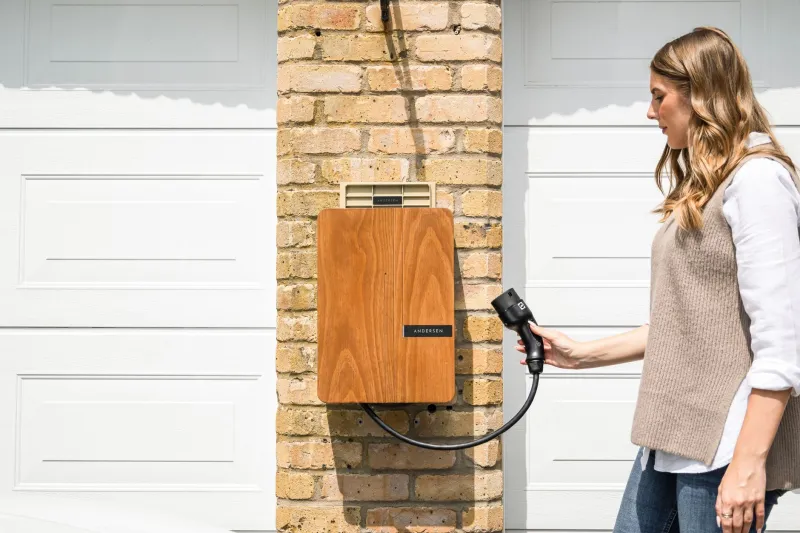
Three-phase power has become a familiar talking point in UK home charging. A 22 kW wallbox sounds like a decisive upgrade over the 7 kW units fitted to most driveways, and some installers now present it as future-proofing. For most households, however, the financial case is far weaker than the brochure suggests. The limiting factor is rarely the charger itself; it is usually the car, the electricity supply and the amount of time a vehicle actually sits still.
What a 22 kW Charger Actually Requires
Most UK homes receive a single-phase supply of around 230 volts. A standard 7 kW home charger makes sensible use of that supply and can replenish a typical EV overnight. A 22 kW unit needs a three-phase supply of around 400 volts and a higher-capacity connection. In practice, that can mean new supply cables, a revised meter arrangement, changes to the consumer unit and, in many cases, work by the distribution network operator.
The costs are therefore not limited to the wallbox. Quotes commonly include a hardware premium over a 7 kW unit, additional installation labour and, where three-phase power is not already present, a distribution network operator connection charge. The last item can be the largest and most unpredictable, because it depends on the local network and the distance to suitable three-phase infrastructure. A driver who buys the charger before obtaining a formal supply quote may discover that the connection work costs more than the equipment.
Where a property already has a three-phase supply, the incremental cost is much lower. That is an important distinction. The question is not whether 22 kW charging is useful in principle, but whether the extra capacity justifies the specific cost of creating it at a particular address.
The Vehicle Is Usually the Bottleneck
A 22 kW charger cannot force a car to accept 22 kW. Most UK EVs have an onboard alternating-current charger rated at 7 kW, with some models accepting 11 kW on a three-phase supply. Only a minority can take the full 22 kW. If the car accepts 7 kW, a 22 kW wallbox will still charge it at 7 kW. The driver has paid for capacity that the vehicle cannot use.
This is the central financial point. Home charging speed is a chain with several links: the supply, the wallbox, the cable and the car. Upgrading one link does not raise the ceiling if another link remains lower. For many drivers, the sensible first step is to check the vehicle's onboard charger rating and the maximum AC input it can accept. That figure alone will rule out the 22 kW upgrade for a large share of households.
Where Faster Charging Has Real Value
The case for 22 kW is strongest where time itself has a clear cost. A high-mileage driver who returns home between appointments may value a two-hour recharge far more than a driver who plugs in at 8 pm and leaves at 7 am. The same applies to taxis, car-sharing clubs, small fleets and households with several EVs competing for one charge point.
An illustrative calculation helps. If a compatible car needs 42 kWh to move from 10% to 80%, a 7 kW charger will take roughly six hours. A 22 kW charger could complete the same task in about two hours, assuming the car accepts that rate and the supply supports it. The energy consumed is the same, so the cost per kWh is broadly unchanged. The benefit is turnaround time, not a lower pence-per-mile figure.
That distinction matters because faster charging is often marketed as an efficiency gain. In most homes it is a convenience gain. Convenience can be worth paying for, but it should be priced explicitly rather than folded into a general claim about lower running costs.
Supply Upgrades Can Bring Other Benefits
Three-phase power is not only about charging speed. It can make load management easier in homes with heat pumps, electric heating, solar panels, battery storage or two EVs. It may also allow two chargers to share capacity more gracefully. For a household already planning several high-load electrical additions, the supply upgrade may be part of a wider electrical strategy rather than a charging-only expense.
Even then, the charging case should be separated from the wider electrical case. If the supply work would have been needed anyway, allocating part of its cost to the EV charger overstates the benefit of 22 kW charging. If the supply work is being triggered solely by the desire for a faster home charger, the financial hurdle is much higher.
A Simple Break-Even Test
Before commissioning any work, a driver can apply a short practical test. First, does the car accept more than 7 kW on AC? If not, the upgrade cannot deliver faster charging. Second, is three-phase power already available at the property? If yes, the incremental cost may be manageable. Third, does the household regularly need to recharge more than 7 kW can deliver during the available off-peak window? If overnight charging already finishes before departure, extra speed adds little.
Fourth, what is the full installed cost, including the distribution network operator quote, rather than the wallbox price alone? Fifth, could occasional public charging or workplace charging cover the few days when faster home charging would help? For many drivers, a handful of public charging sessions each year costs less than a multi-thousand-pound supply upgrade.
The Standard 7 kW Unit Remains the Default
For a typical UK driver covering moderate annual mileage, a 7 kW smart charger remains the rational choice. Overnight charging can add well over 200 miles of range, which exceeds the daily requirement of most households. A well-managed off-peak tariff and a charger with load balancing will usually deliver more financial benefit than a faster unit that the car cannot fully use.
The 22 kW home charger is not pointless. It is a specialist tool for drivers with a compatible vehicle, a high-turnover charging pattern, suitable supply conditions and a clear willingness to pay for time. For everyone else, the ceiling is set by the car and the daily routine, not by the wallbox. In 2026, the smarter financial choice is often the slower charger that matches the way UK homes actually use their cars.